Installation - Engineering
Lighten Up
An interactive LED light installation to promote community mindfulness and meditation.
- When
- January - April 2022
- Where
- Northeastern University
- Who
- Mckenna Poulos (Collaborator)
Problem
As Northeastern University’s community experiences an influx of students new to campus and a transition back to hybrid/in-person classes after more than a year of remote learning, there is a need for more space for meditation and mindfulness on campus.
The university provides many study and collaboration spaces on campus for students, as well as community gathering spaces, but there are not enough places on campus to easily be alone and focus on balancing the busy lifestyle of being a student.
Solution
I worked with a group of 3 other students to create an interactive light installation based on color theory. I owned the development portion along with one of my other team members, learning new tools to bring our idea to life.
We turned a small, central location on campus into an immersive space for meditation and mindfulness. Visitors to the space were able to shape the room's appearance around their own emotions, using color as a form of therapy, and we constructed the installation to open during finals week when there would be the most need for this type of space.
Research & Discovery
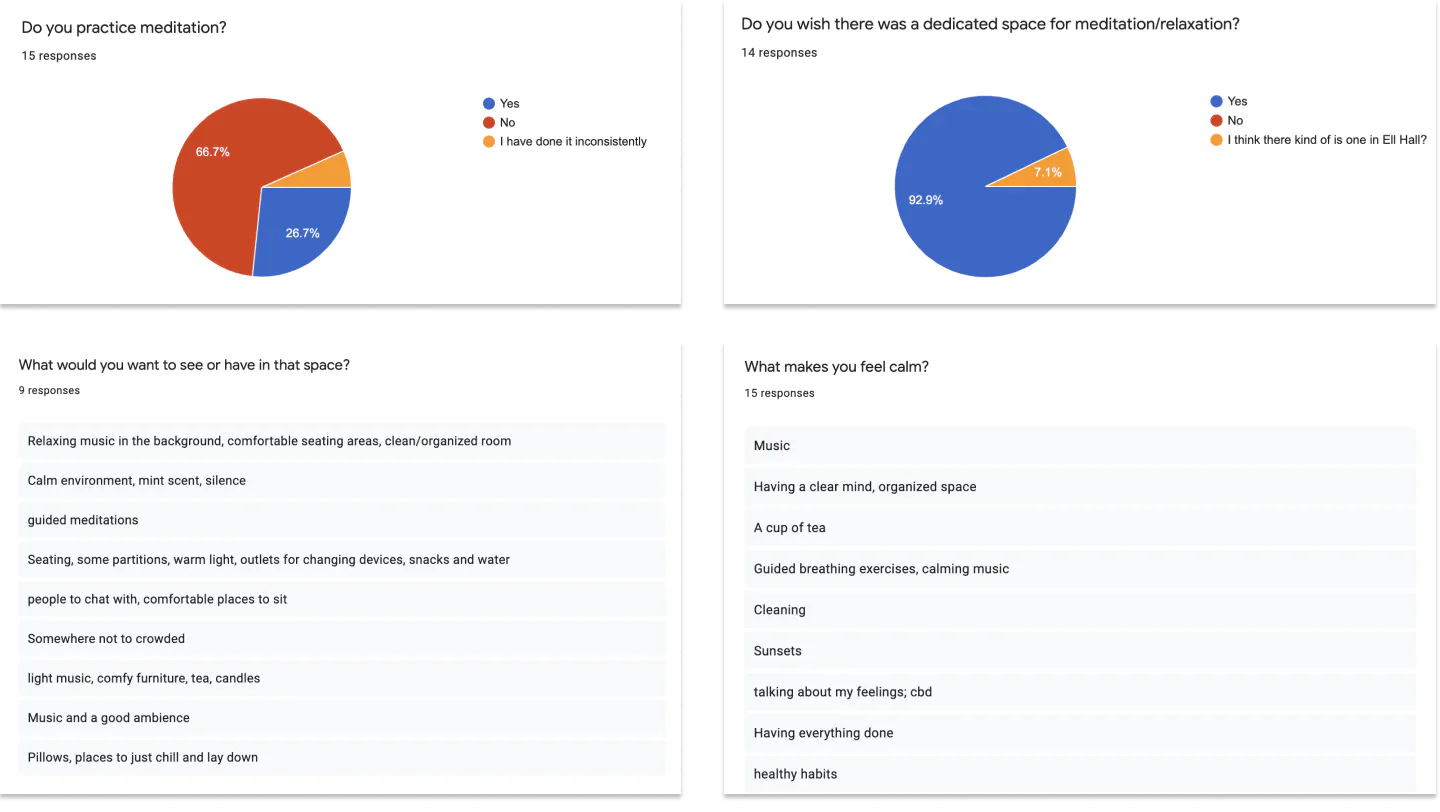
We surveyed about 15 Northeastern students about their current relaxation habits. Many students answered that what made them feel calm were having a clear mind, organized thoughts, guided meditation, and healthy habits. This led us to think about how we could approach mental wellness through the lens of providing an interactive sensory experience, and introduce students to mindfulness and meditation along the way.
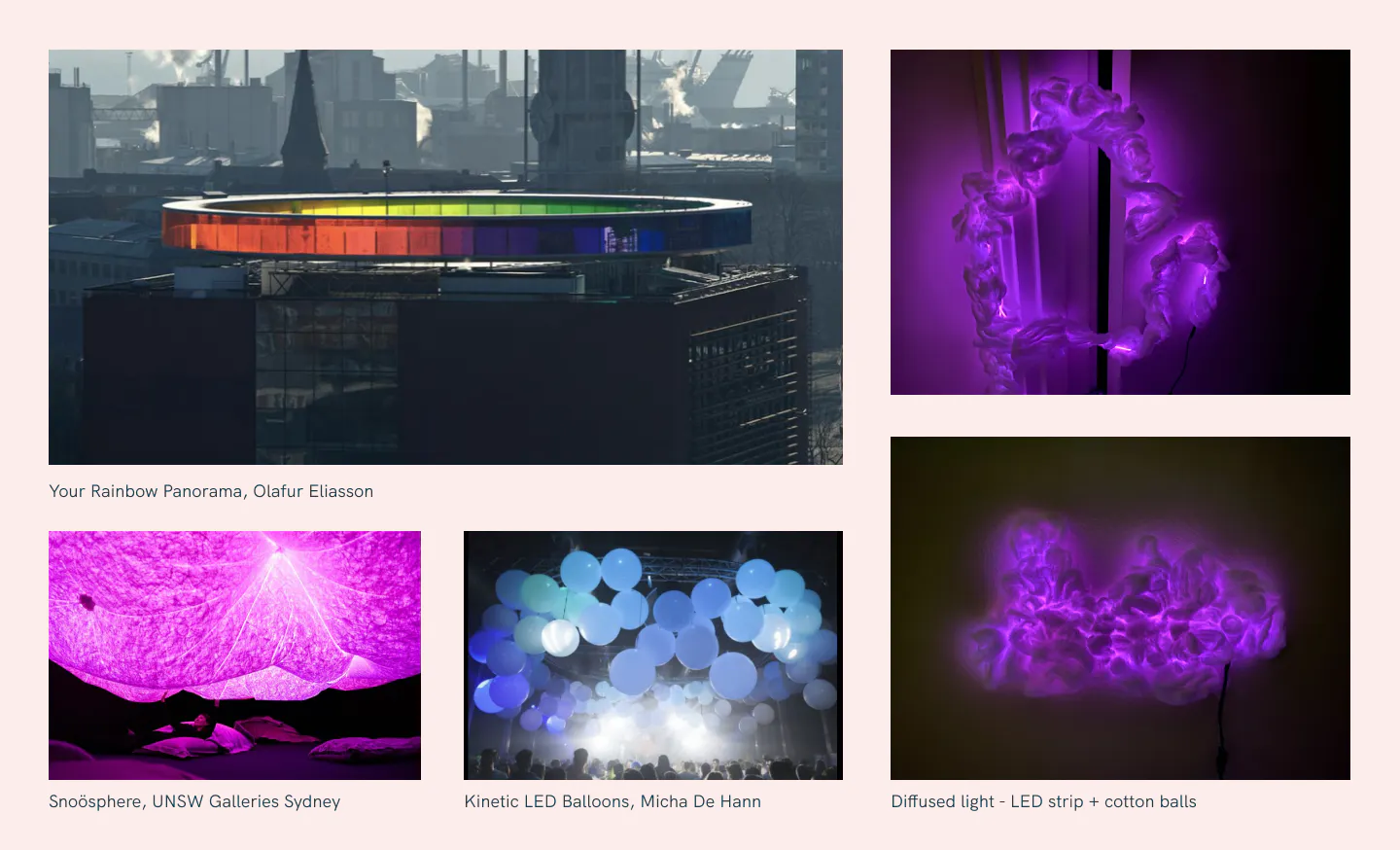
We gathered references, examining existing products and large-scale installations focused on immersive mindfulness and meditation that ultimately led us to focus our concept on using light and color to evoke emotion.
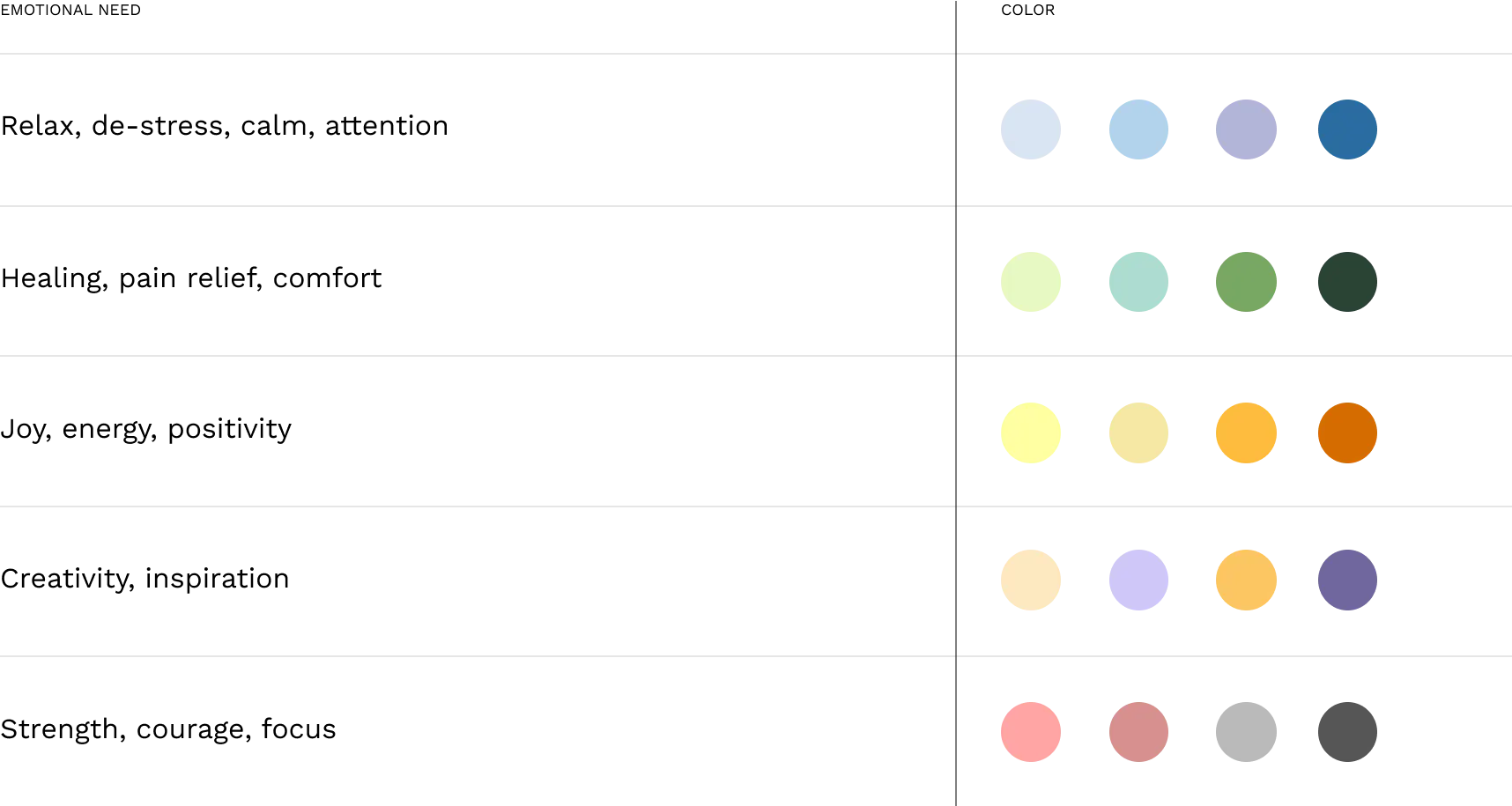
From there we researched how color affects emotion, and built a reference table connecting specific colors and shades to the feelings they tend to evoke, which became the backbone of our animation design.
Design
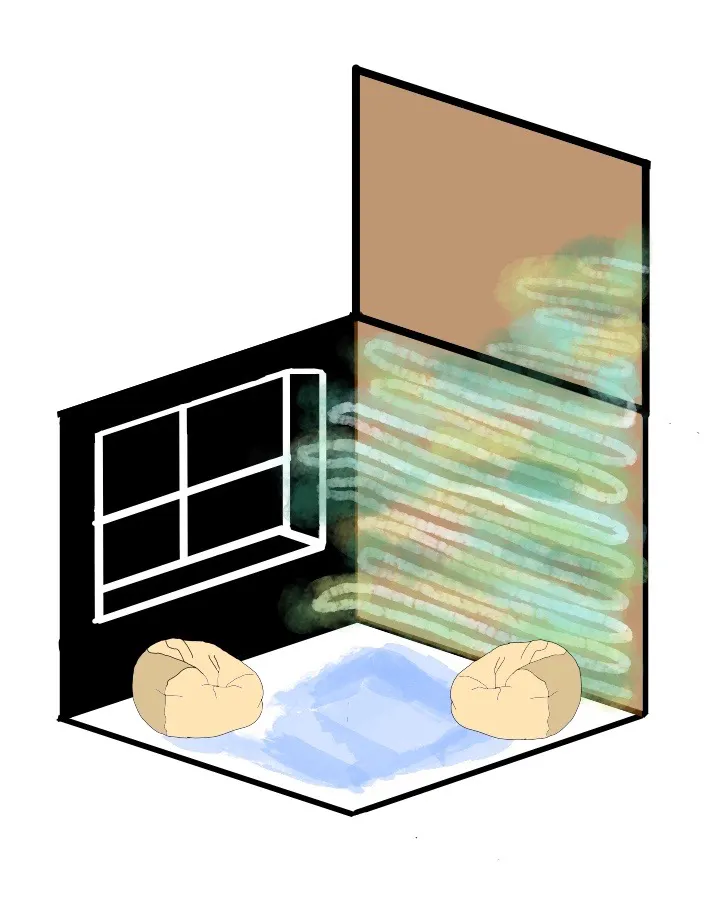
We partnered with Northeastern's Center for Spirituality to gain access to a 12x12 room that already existed within a space dedicated to mindfulness. We planned to line it with diffused LED strips, blacking out the windows so the light itself became the only source in the space.
Using Adobe After Effects, we mocked up color animations and tested them with students to see which movements read as which emotions, refining them against our color research until we landed on final designs.

Development
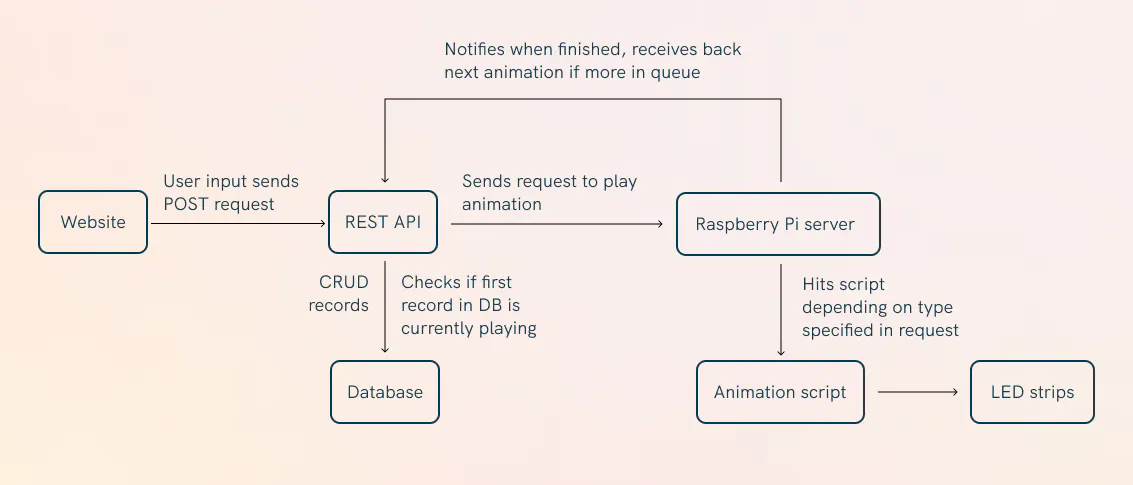
For interaction, we decided the exhibit should be triggered from users' phones rather than in-room buttons, since we needed to support multiple people using the space at once. This required the use of a queue system, which we implemented using a SQL database to control the logic behind a simple webpage. We powered the lights with a Raspberry Pi connected to LED strips, choosing this stack for its strong documentation and community support while learning how to use the tool for our use case. I planned the technical architecture using a diagram so that we could understand how all the different pieces of our system worked together to display an animation on the light strips.
Implementation
We mapped each LED to a "pixel" in our animation plan and started at a smaller scale, testing wiring and timing on a single strip before installing within full room. Color values shifted once translated from screen to RGB values on physical lights, so we spent some time recalibrating these to match our original research. We created Python scripts for each animation to loop through and set each pixel's color, changing with timed intervals to create the effect of movement.
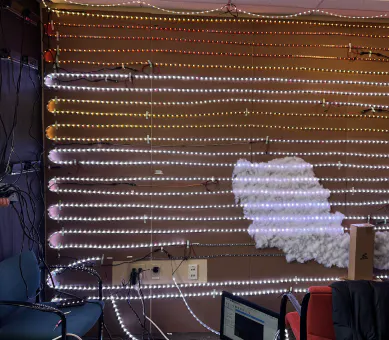
To construct the installation, we put light-blocking paper over the windows in the space and installed the LED light strips to the wall, overflowing them and threading them into the ceiling to produce a more organic effect. We constructed shelves to hold overflow technical equipment like the Raspberry Pi, batteries, and extension cords, and used cotton stuffing placed over the light strips to diffuse the light and have it appear softer, with the intention that this could double as another sensory option for those navigating the space.
Result
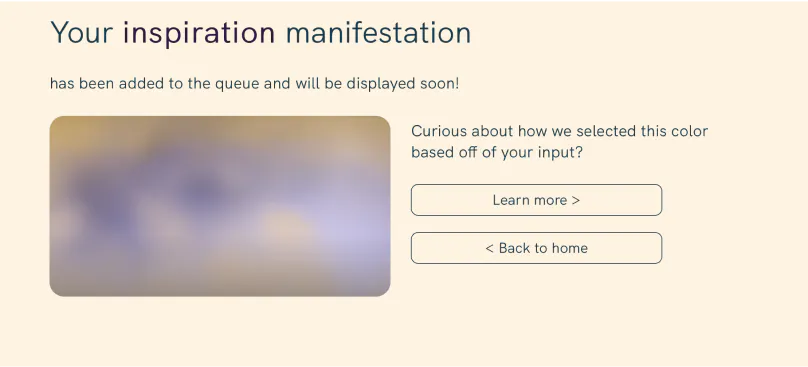
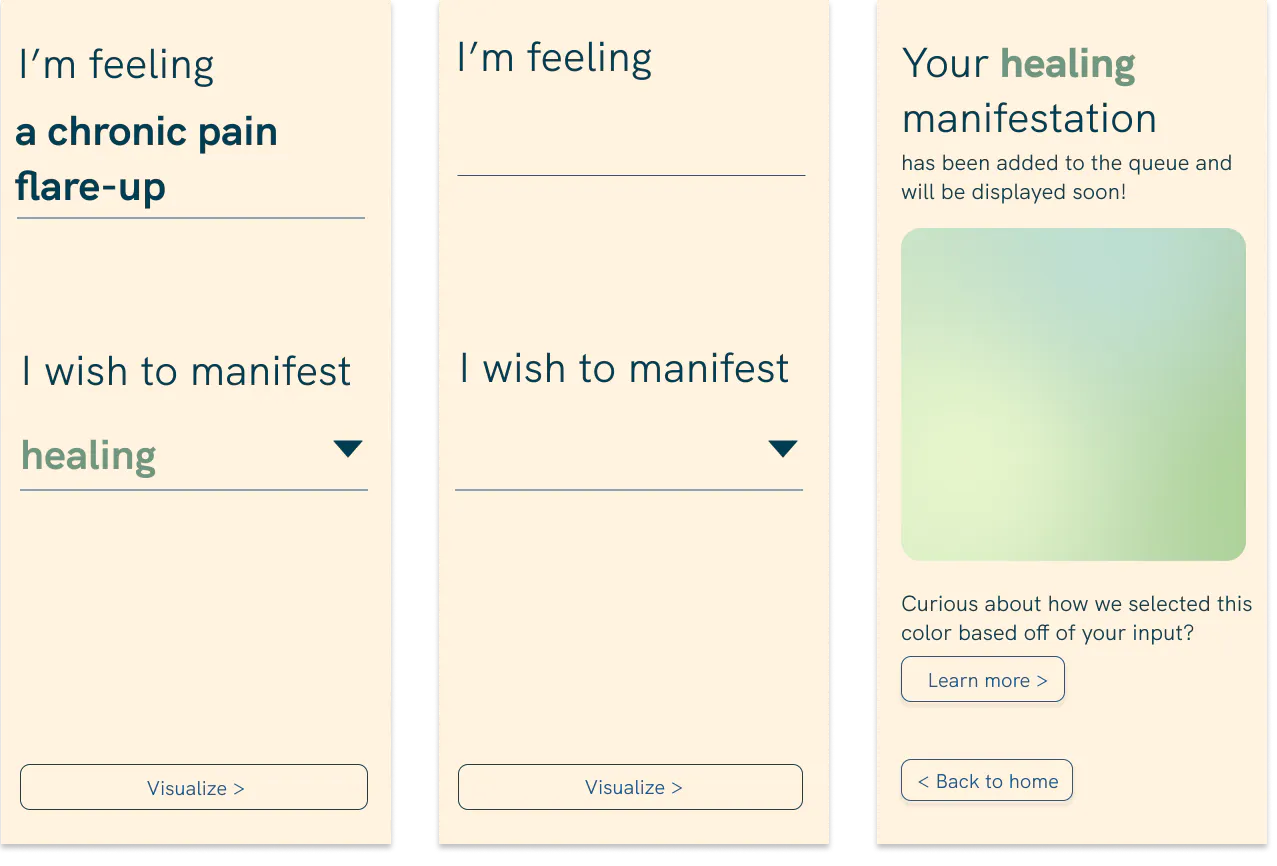
Our final website, available through a QR code upon entering the space, introduced visitors to the project, explained the color research behind it, and asked them to name what they were feeling and what they wanted to feel instead. After clicking "Visualize," they would watch their answer become reflected in light on the wall in front of them.
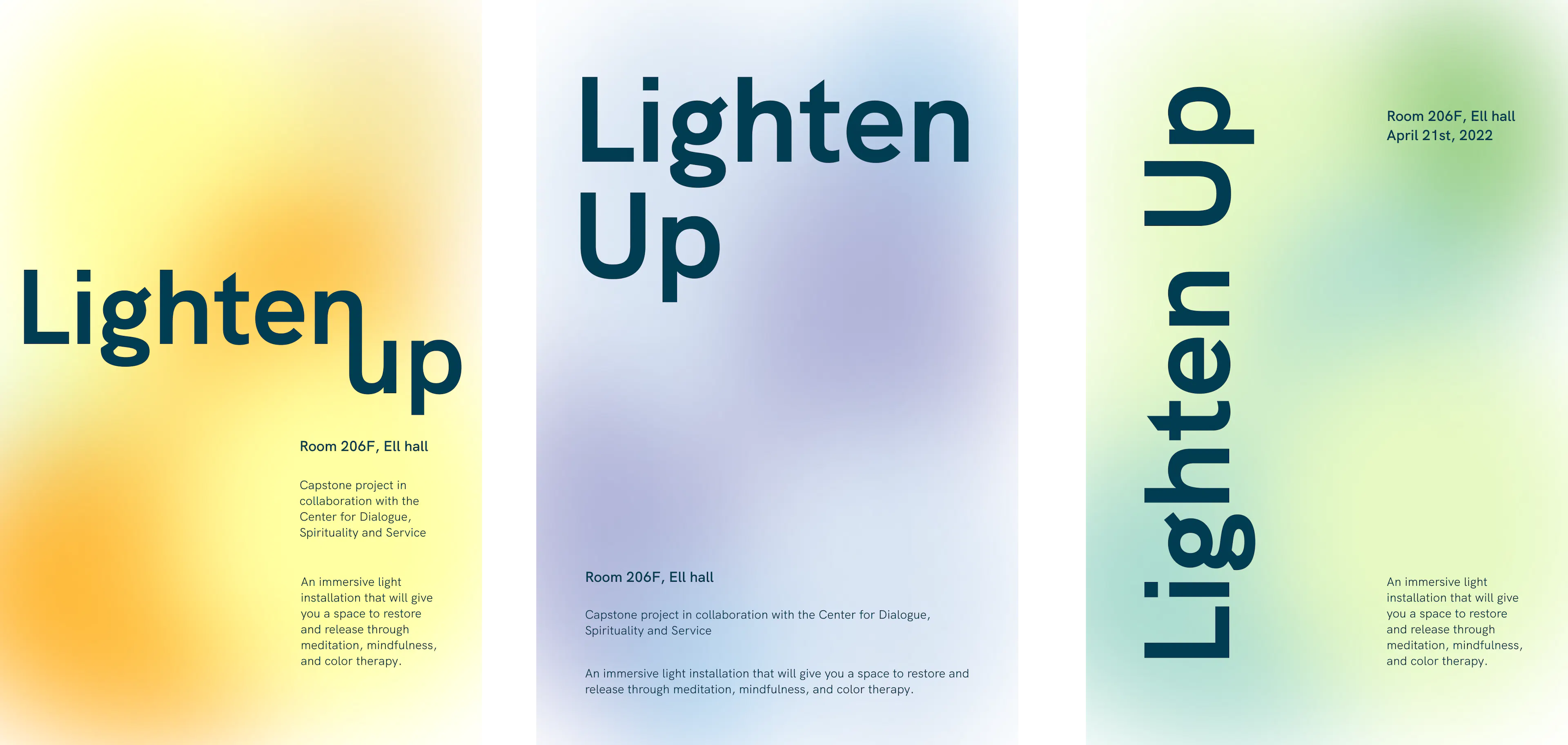
We publicized the installation with posters around campus in the weeks leading up to the installation opening. Some videos of the installation can be found here.